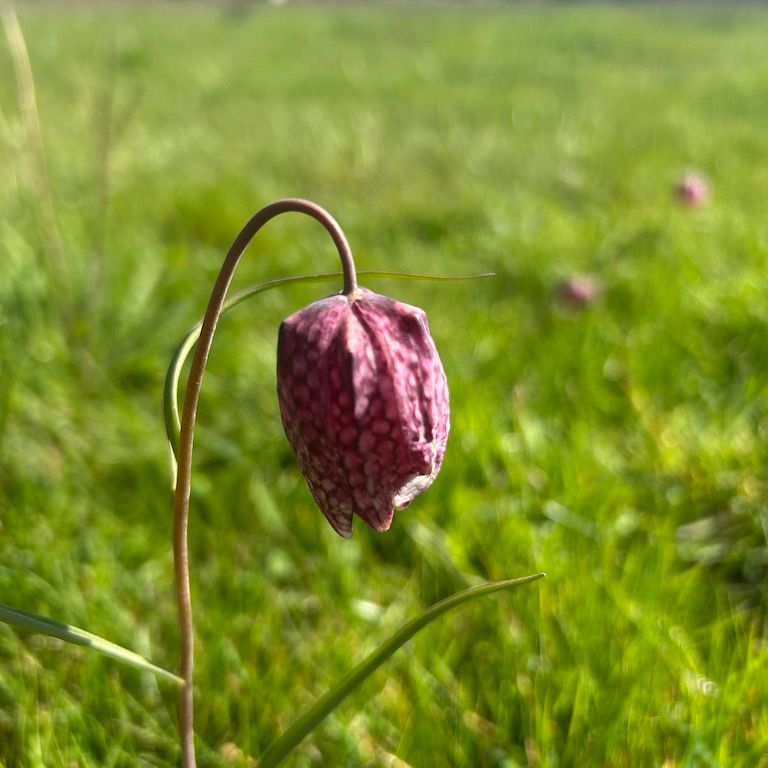
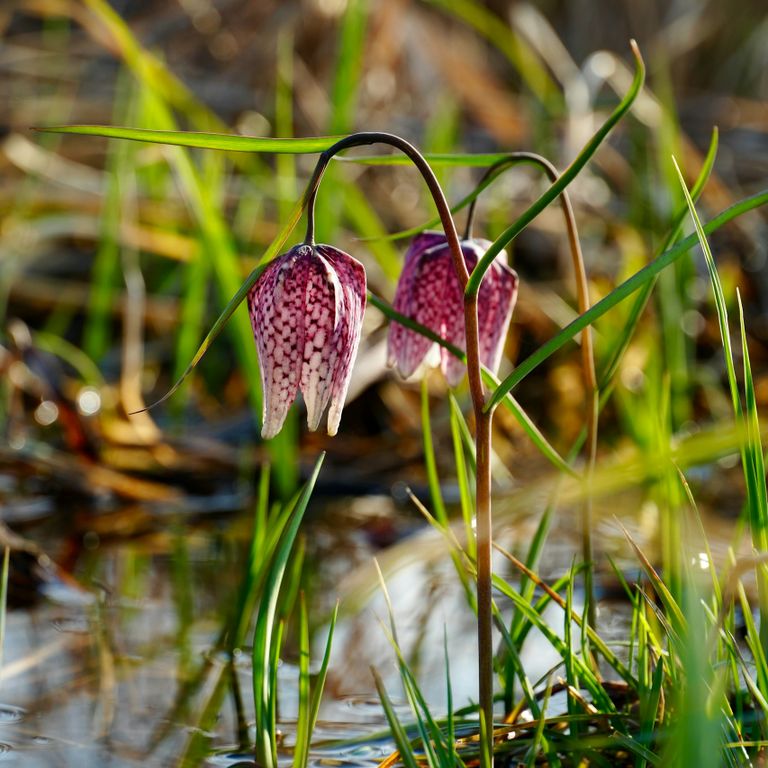
Snake's-head Fritillary
🌼 Habitat: Ancient floodplain meadows, damp grassland and traditional hay meadows
📍 Found in Britain: Scattered and local, mainly in central and southern England. Oxfordshire is one of the country's strongholds, with Iffley Meadows home to one of the UK's best displays.
📏 Size: Usually 20–40 cm tall, with one or two distinctive nodding flowers on each stem
🌸 Season: Flowers for a short time in April and early May, with peak displays varying depending on the weather
🐝 Wildlife Connections: Early bees and other pollinating insects visit the flowers for nectar. They thrive in species-rich meadows alongside cowslips, cuckooflowers and other spring wildflowers.
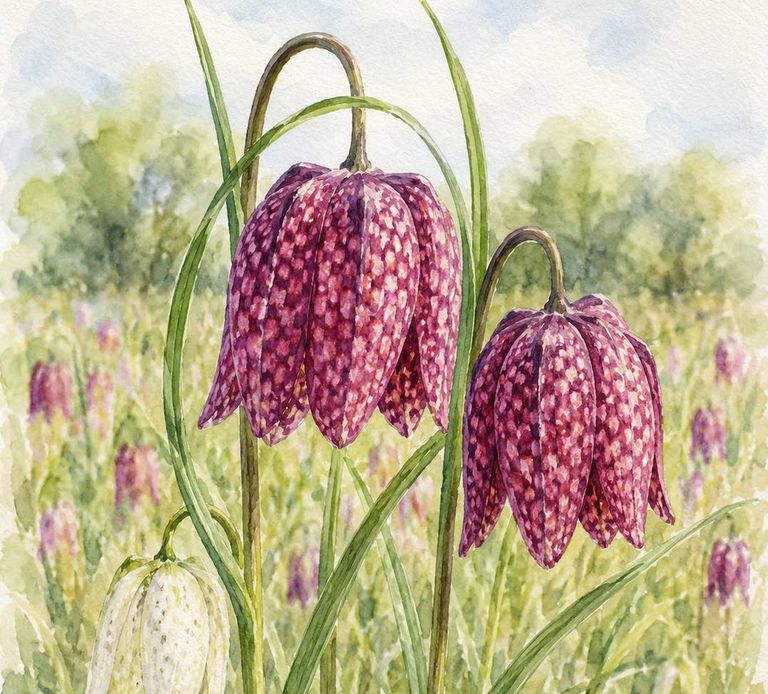
👀 Look out for: Drooping, bell-shaped flowers with an unmistakable purple-and-pink chequered pattern. Keep an eye out for the occasional pure white flower growing amongst them.
🦸 Nature Superpower: They can lie hidden underground as bulbs for most of the year, emerging for just a few weeks each spring to transform ancient meadows into one of Britain's most spectacular floral displays.
The chequered spring flower that turns Oxford’s ancient flood meadows purple and white, provided you arrive at the right time.
The first snake's-head fritillary we ever saw wasn't in one of Oxfordshire's famous meadows. It was a single flower at a nature day at Barton Fields.
The guide pointed it out to us just as a group of excited little children came charging over. There was a collective intake of breath from all the adults as everyone made sure that this tiny, delicate flower wasn't about to disappear beneath a stampede of wellies. Thankfully, we succeeded.
It certainly is an exciting looking flower, like a little snake peering down at some prey below. The flower hangs down like a little lantern, its petals covered in an extraordinary chequered pattern of deep purple and pinkish-maroon. It almost looks like a made up flower that Alice might have stumbled across in Wonderland. Every now and then you'll come across a pure white one growing amongst the purple.
After that first encounter, I read about the spectacular display at Iffley Meadows. Every spring, thousands of snake's-head fritillaries bloom across the floodplain, and I'd built quite an image in my mind of what it would be like.
We decided to make a day of it, starting at Oxford Botanic Garden before walking over to the meadow. Little Leopard was the first to spot a fritillary in the garden, which felt like a lovely bonus.
In hindsight, it stole the thunder of the meadows a little. By the time we reached Iffley Meadows, we'd already seen our first fritillary of the day. Then, instead of the carpet of flowers we'd imagined, we found ourselves carefully searching through the grass for individual blooms.
It was still lovely. There's something quite satisfying about finally spotting one after scanning the meadow for a few minutes. But it wasn't quite the spectacle I'd been expecting. The flowers we saw were stunning, but we'd arrived too early.
Snake's-head fritillaries only flower for a few weeks each spring, usually during April. Exactly when the display reaches its peak depends on the weather, so visiting just a week too early can make a huge difference. Next year I'll definitely keep an eye on the flowering updates before making the trip.
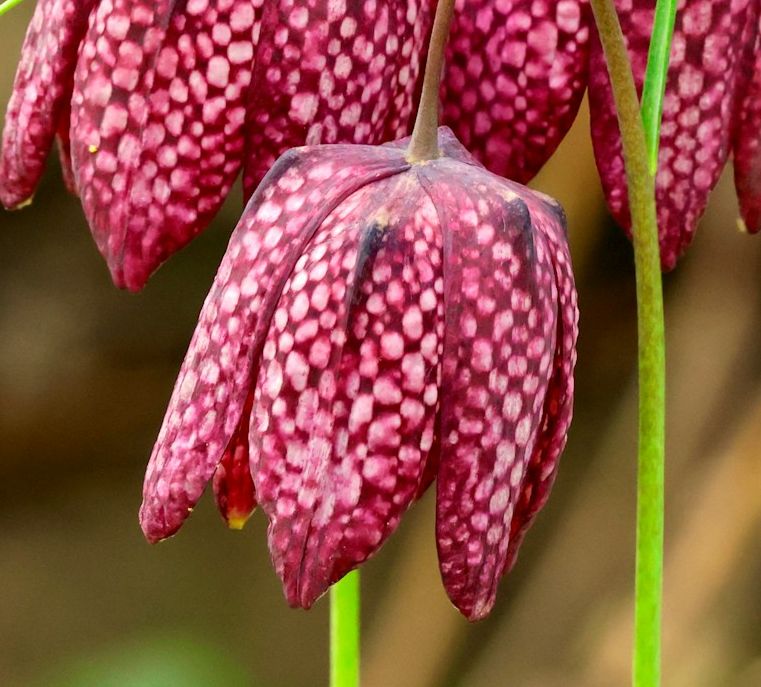
Iffley Meadows is one of the finest places in Britain to see them. Some years the reserve is covered with tens of thousands of flowers. Earlier this year (2026) volunteers counted 41,748 flower heads, while in exceptional years the total has reached almost 90,000. It's remarkable to think that when BBOWT took over management of the reserve in the early 1980s there were only around 500 flowers left. Careful grazing and traditional meadow management have allowed the population to recover into one of Oxfordshire's greatest spring wildlife spectacles.
Snake's-head fritillaries aren't just beautiful, they're also surprisingly picky about where they'll grow. They thrive in old floodplain meadows that are allowed to flood naturally in winter and haven't been improved with fertilisers. As these traditional hay meadows have disappeared across Britain, so too have many of the fritillaries that depended on them. Places like Iffley Meadows have become increasingly important because they preserve this rare habitat as well as the flowers themselves.
I love how delicate they are. Each plant produces just one or two nodding flowers on a slender stem, rising above narrow grey-green leaves. Looking at a single flower, it must be stunning to see the meadow eventually covered in them.
Next spring, we'll be back. Hopefully a week or two later, ready to see the display in its full glory.
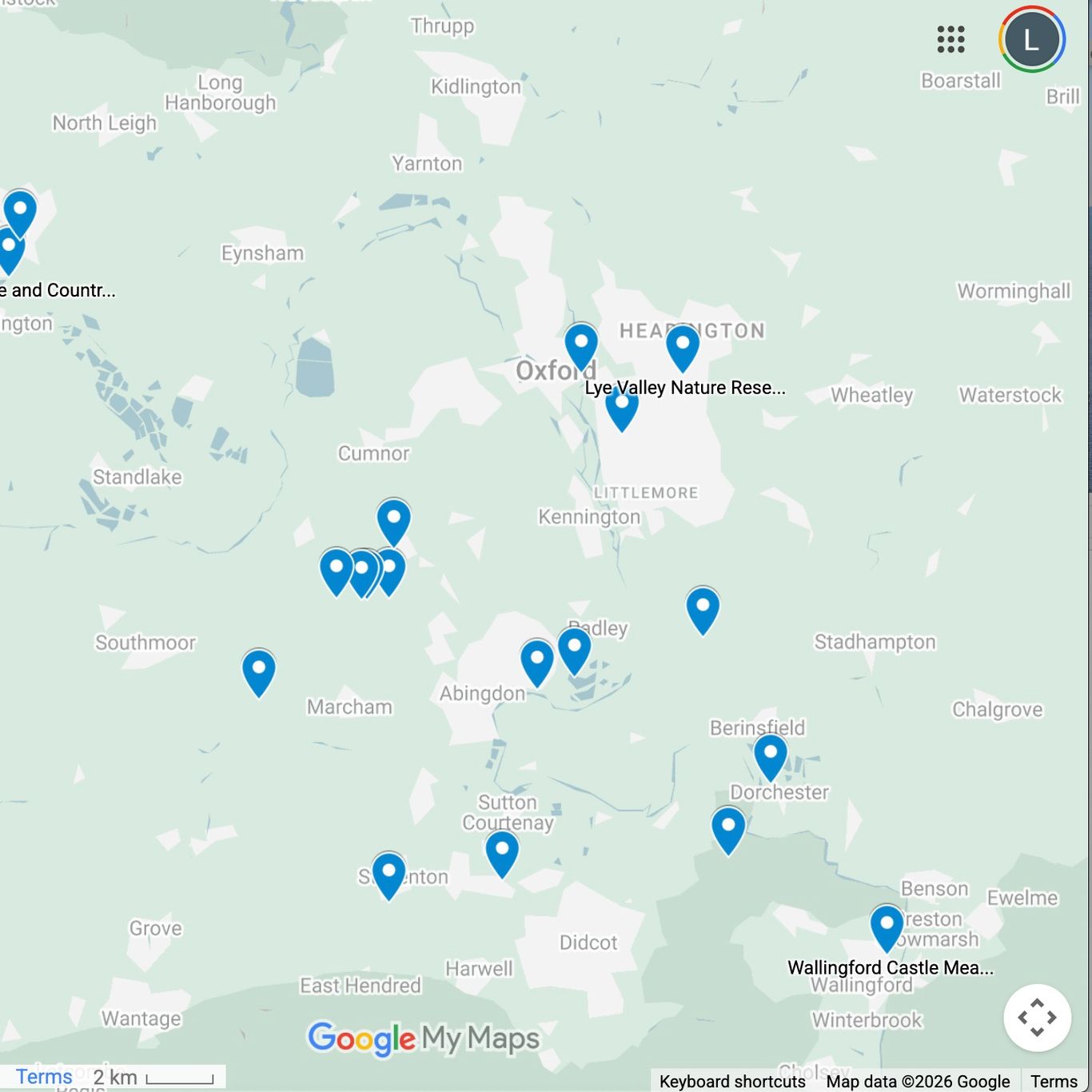
Where we spotted it
Why not try these Oxfordshire Nature Adventures in the spring to check out the snake's-head fritillaries? Or head here for more inspiration
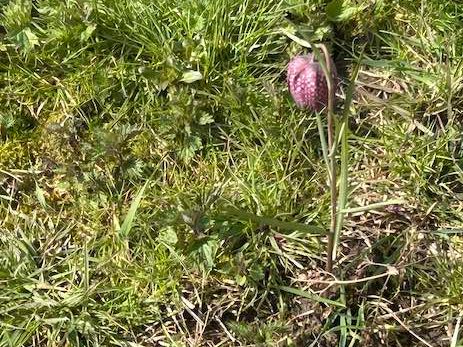
March 2026 · Nature Reserve · Event
Barton Fields
A guided walk around the nature reserve, bird watching, learning how to spot signs of animals and handling newts and slow worms
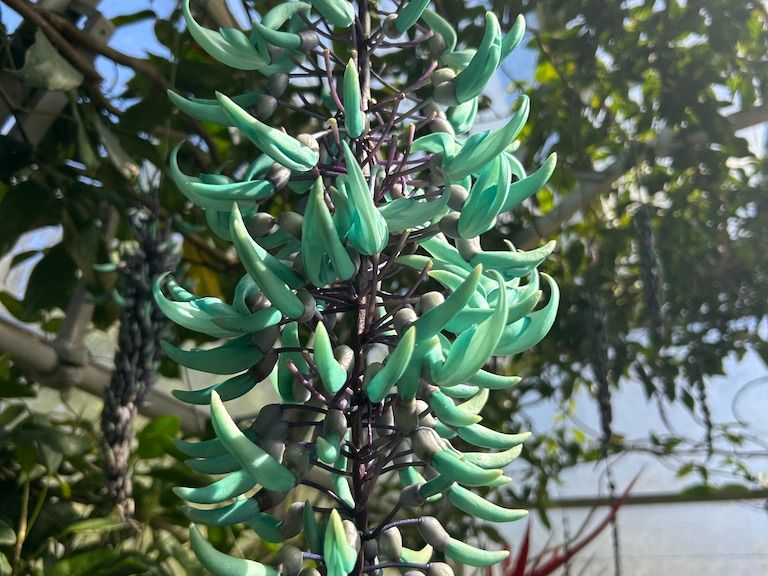
April 2026 · Parkland & Gardens
Oxford Botanic Garden
A place we pop into regularly to see how the plants change over the seasons, this visit was made even more special with the jade vine blooming.
Find your nearest Adventure
Please note - this map works best on desktop so that you can enjoy filtering by type of adventure, and clickable links.