Oxford University Parks
📍 Oxford
🌿 Park, River, Pond
💷 Free
⏰ 1 - 2 hours
👣 Gentle Stroll
☕ Toilets, horsebox cafe
July 2026 · Nature Adventures · Parks · River
Soak in the peace among the wide variety of trees, birds and dragonflies. A haven in a metropolis.
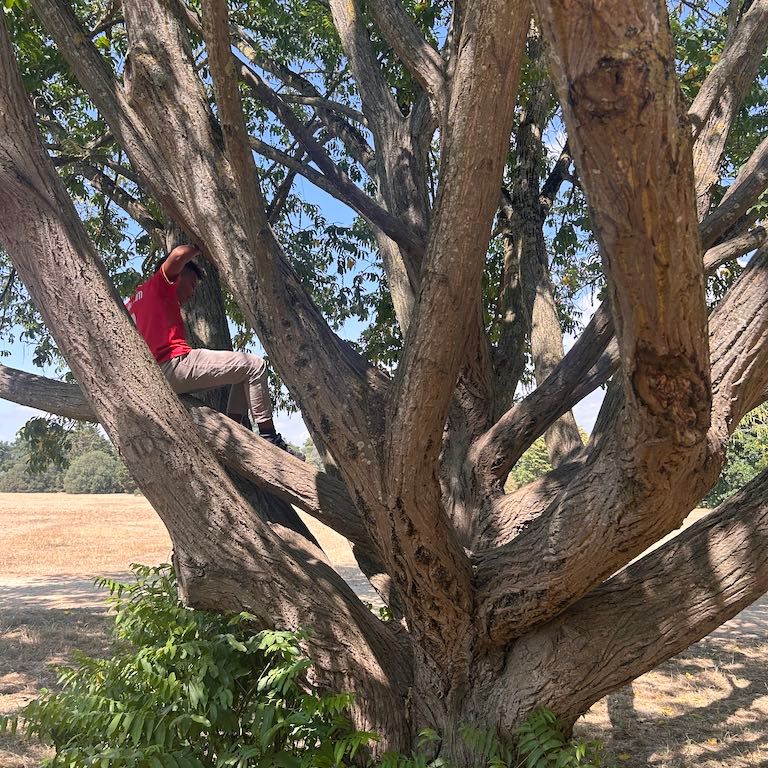
We’ve popped into this park a lot of times over the years. Often to enjoy a picnic after visiting the museum of natural history. I’ve got joyful pictures of little leopard playing under blossom raining down on him, or climbing trees.
It’s also been a wonderful place for me to go when I’ve got an hour and or 2 spare and need to rest my weary body against a sturdy tree trunk, gazing up at the leaves above and watching gold crest, blue tits or the like hop and chatter far above.
There is no-where in the county we’ve been too that’s taught us more about trees (and I’m including the wonderful Harcourt Arboretum in that). Lots of the trees have not only labels on them, but also qr codes that take you to a map of the park with every tree labelled on it, telling you the species, what stage of its life it’s at, crown spread, height and also how much carbon is stored in it. Check out this Arboretum Explorer Portal.
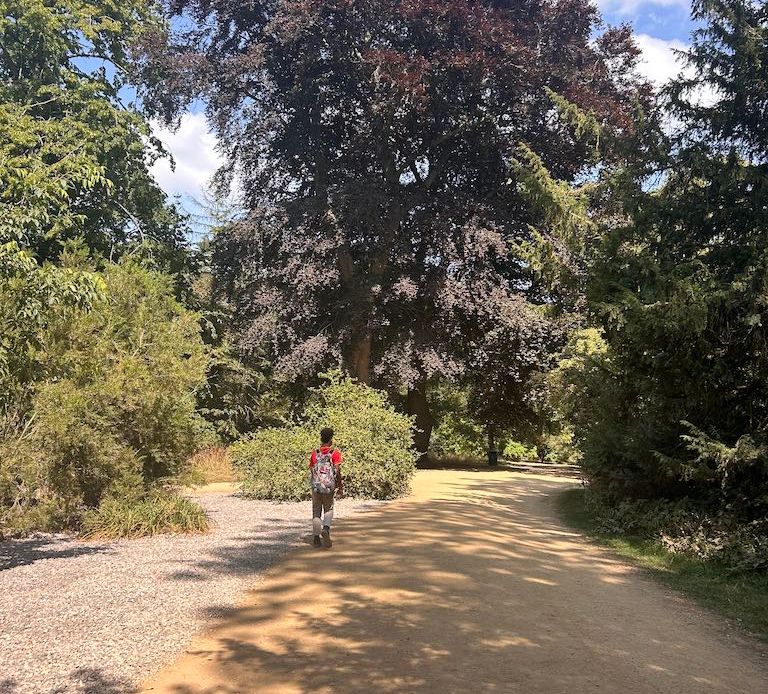
With over 1900 trees to choose from, it’s a great place to play tree detective, trying to recognise the classics, before checking the results. Sometimes we were surprised. I thought one beautiful red headed beauty was a copper beech, but instead it was a purple beech (who even knew that was a thing!) a lovely willow that little leopard enjoyed climbing, then turned out to be a Caucasian wingnut. Which we’d never heard of, but it was obviously not a willow when we looked properly and sat the gorgeous string of leaves/ flowers hanging down. It’s also called a Caucasian walnut, and the nuts can be used in cooking, the bark to weave hats.
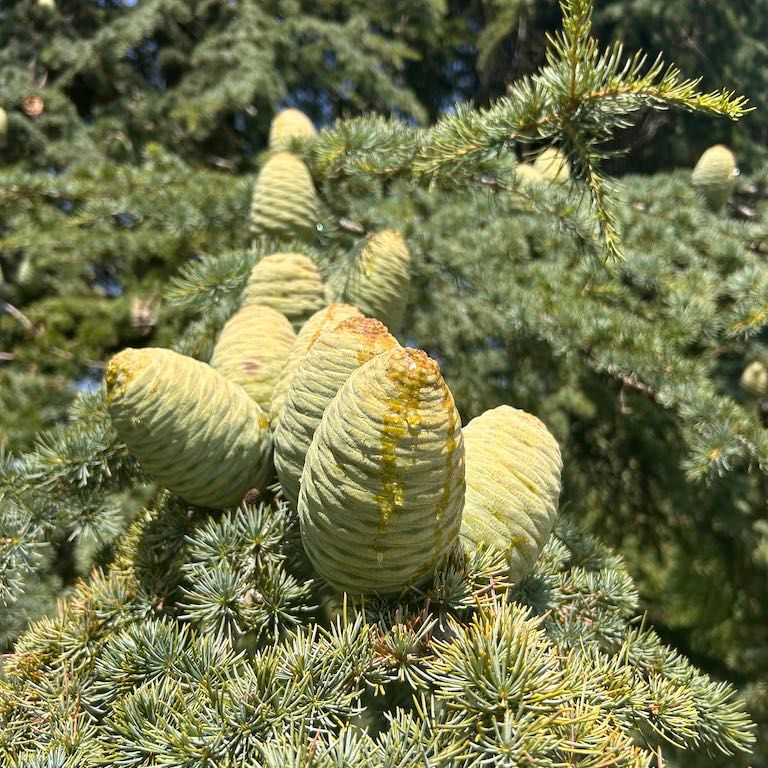
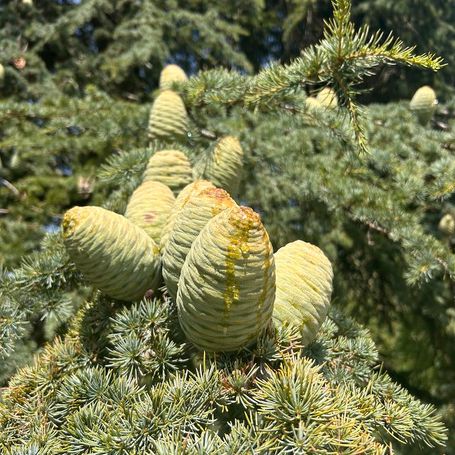
Another big hit with little leopard was the blue atlas cedar trees, with their growing green pine cones covered in sap. We see pine cones all the time on forest floors but it feels unusual to see them growing at eye level on a tree. The sap has insecticidal uses. It also helps to stop squirrels and birds from stealing the seeds.
One of the fun layers you can look at on the online map is “champion trees” which will tell you where to find the tallest Chinese weeping poplar, or oregan ash, or various hawthorn species in the country
There’s a genetic garden there that didn’t look particularly exciting the last time we went (July 2026), but there were signs saying that they would be replanting soon. We also loved the little paths that cut through woodland, and a desert type habitat with wildflowers where the sprinklers kindly sprayed us as we walked through. There’s a part of the park that’s allowed to turn meadow-y, but it had been cut when we went so I guess we’ll have to get there a little sooner in the spring next year to see it properly.
There’s also paths that can be done that focus on specific trees - hawthorns, flowering apples, magnolia, oak. Though I suspect all those are best investigated in spring with all the lovely colours and blossom on display.
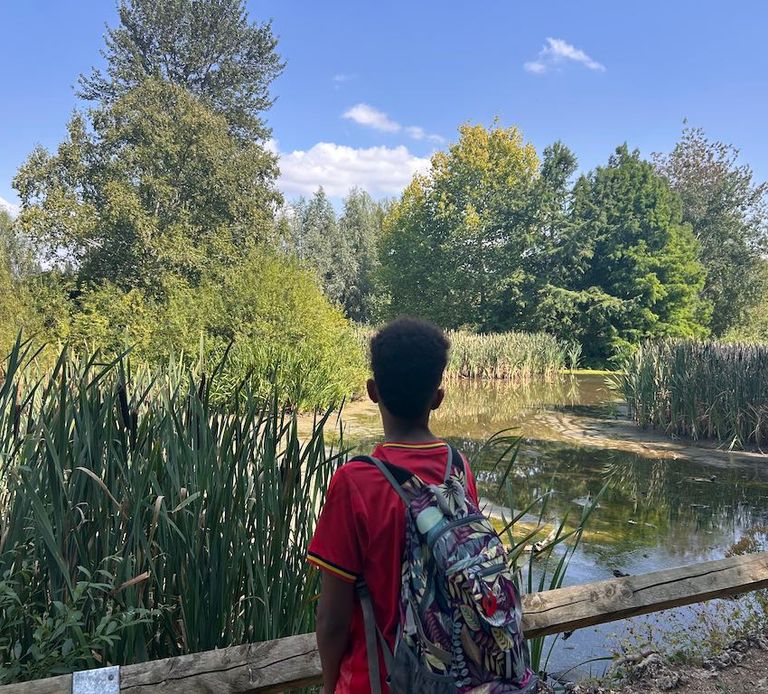
The pond was full of bullrushes, and inevitably dragonflies and damselflies. I struggle to tell the difference still. Little leopard pointed out the different wing shapes and way they fold up at rest. There was a little brown bird hopping about on the ground but it scurried away before we could ID it.
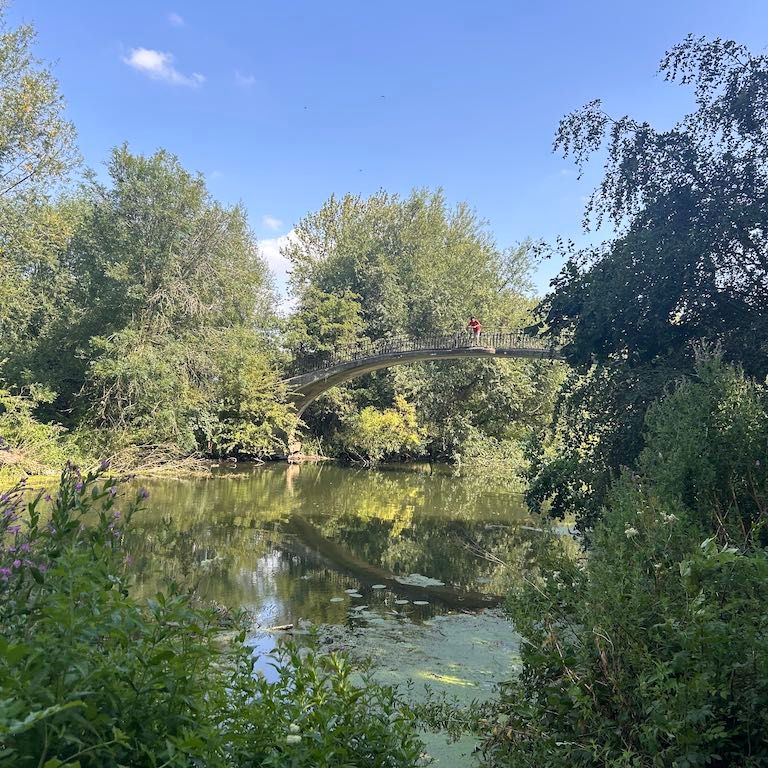
Then there’s the part of the park by the river. Watching people punting by, running across the rainbow bridge. Jumping on logs and watching out for the noisy crowd. Lots of brimstone and cabbage white butterflies flitting nearby. Lush.
It’s such a lovely park to while away an hour or 2, perfect for a relaxed atmosphere while the kids run around, climb trees, have a picnic, with nature observation and learning interspersed in a pressure free way.
There are toilets by the cricket pavilion, a horse box cafe, and a tentorium (the parks offices).
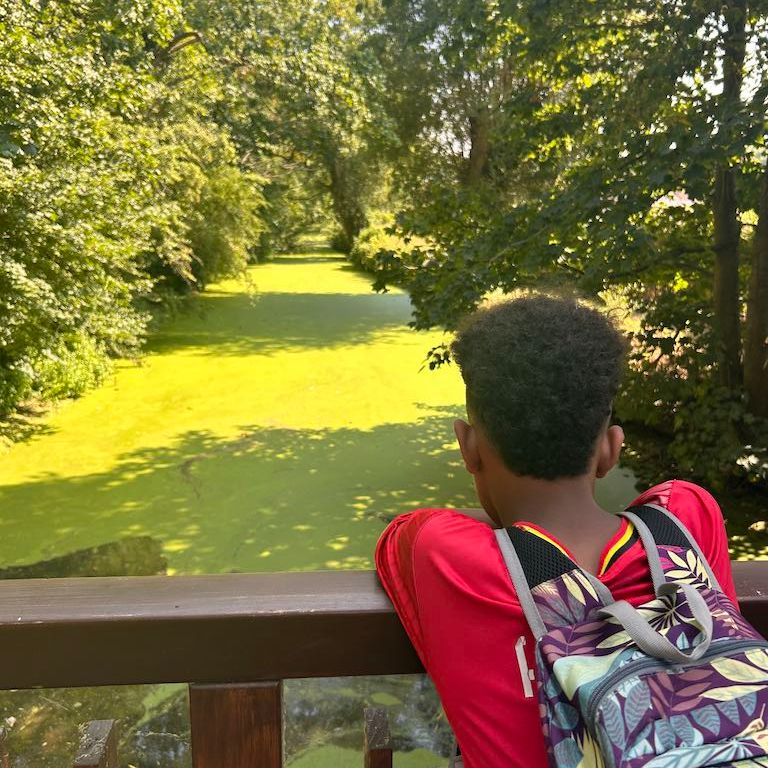
We finished off our visit with a stroll down the Mesopotamia walk. A gorgeous strip of wilderness that almost joins the Park with Headington Hill Park.
This adventure is perfect to combine with a trip to the museum of natural history, Botanic Garden, the Trap Grounds, or Port Meadow. It's an easy walk from buses, and not too far from the train station either.
Nature Notes
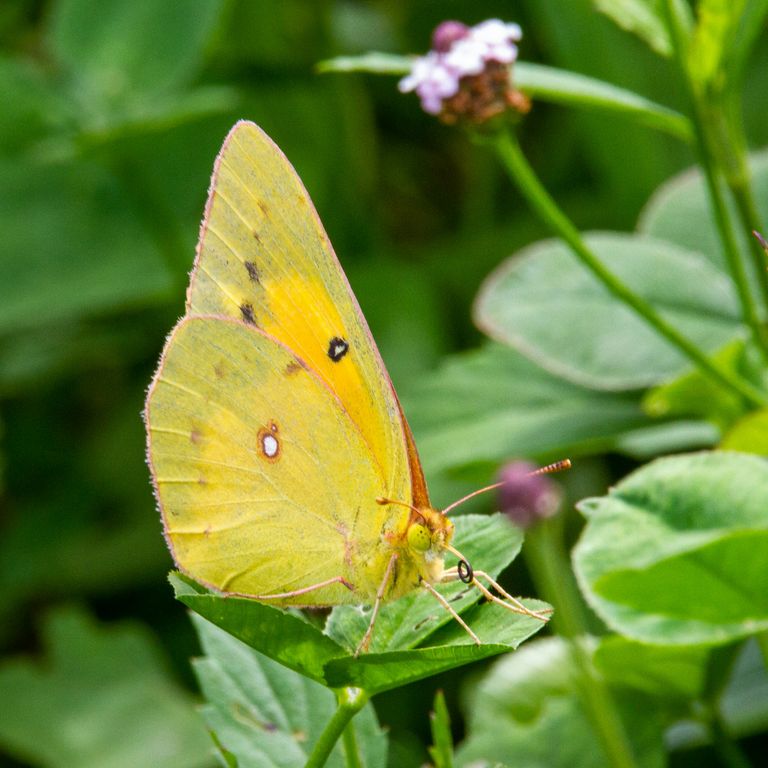
Brimstone
The butterfly that looks like a leaf
Brimstones are one of the first butterflies to appear in spring, waking from hibernation when the weather begins to warm.
Their pointed, leaf-shaped wings help them disappear among foliage when they settle with their wings closed.
Male brimstones are bright lemon-yellow, while females are a much paler greenish-white.
They can live for almost a year, making the brimstone one of Britain's longest-lived butterflies.
Caterpillars feed mainly on buckthorn and alder buckthorn, while adults drink nectar from flowers including thistles, dandelions and buddleia.
Because they hibernate as adults, you may spot a brimstone on warm winter days as well as throughout spring and summer.
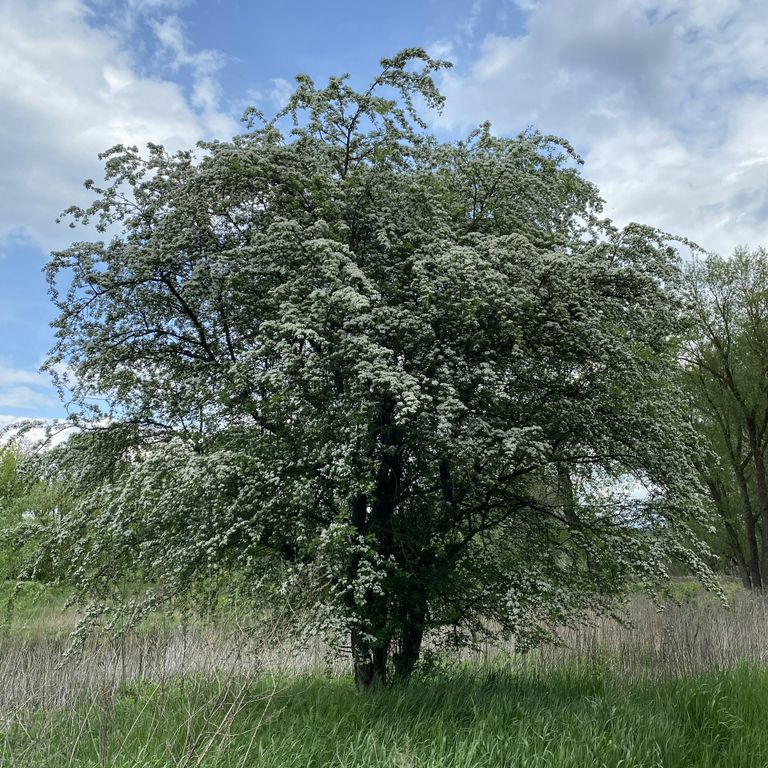
Hawthorn
The hedgerow tree with a feast for wildlife
Hawthorn bursts into clouds of white blossom in spring, often filling hedgerows with flowers.
Its flowers are an important source of nectar for bees and other insects when they are active in spring.
By autumn, the flowers have turned into bright red berries called haws, which are eaten by birds such as thrushes and blackbirds.
Hawthorn's dense, thorny branches provide safe places for birds to nest and shelter from predators.
The leaves are one of the food plants for caterpillars of several moth and butterfly species.
Hawthorn is one of the most common trees in British hedgerows and has been planted around fields for hundreds of years, helping to create valuable wildlife corridors.
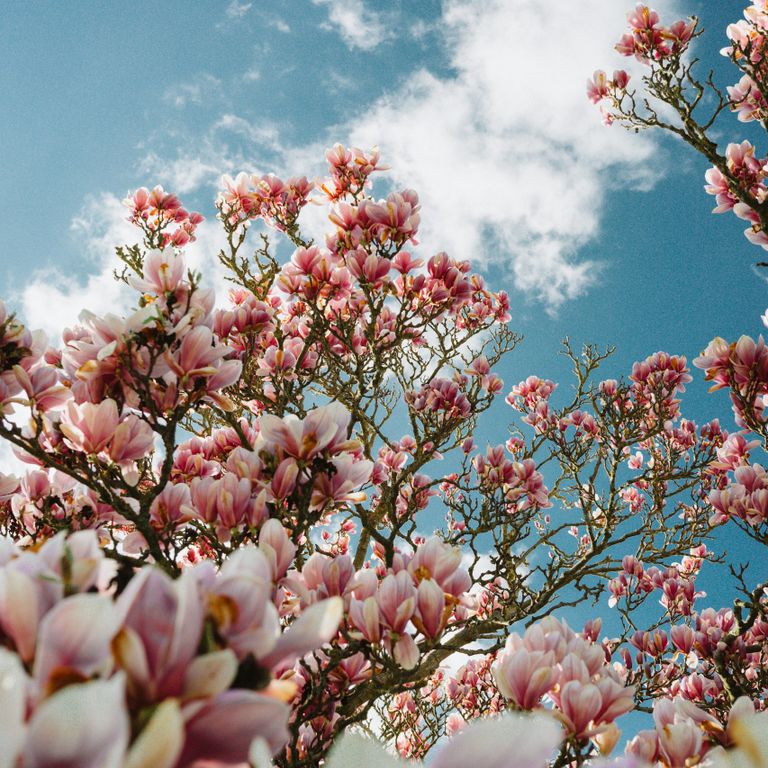
Magnolia
The tree with prehistoric-looking flowers
Magnolias are ancient flowering plants, with fossil evidence showing that their relatives were flowering millions of years before bees existed.
Their large, beautiful flowers evolved to be pollinated mainly by beetles rather than bees.
The tough flowers can cope with beetles crawling over them without being easily damaged.
Many magnolias flower in early spring, sometimes before their leaves appear, making their huge pink, white or purple flowers especially easy to notice.
Their flowers can produce a surprisingly strong fragrance, which helps attract pollinating insects.
After flowering, magnolias produce unusual cone-shaped seed heads. When the seeds ripen, they often hang from the cones on thin threads.
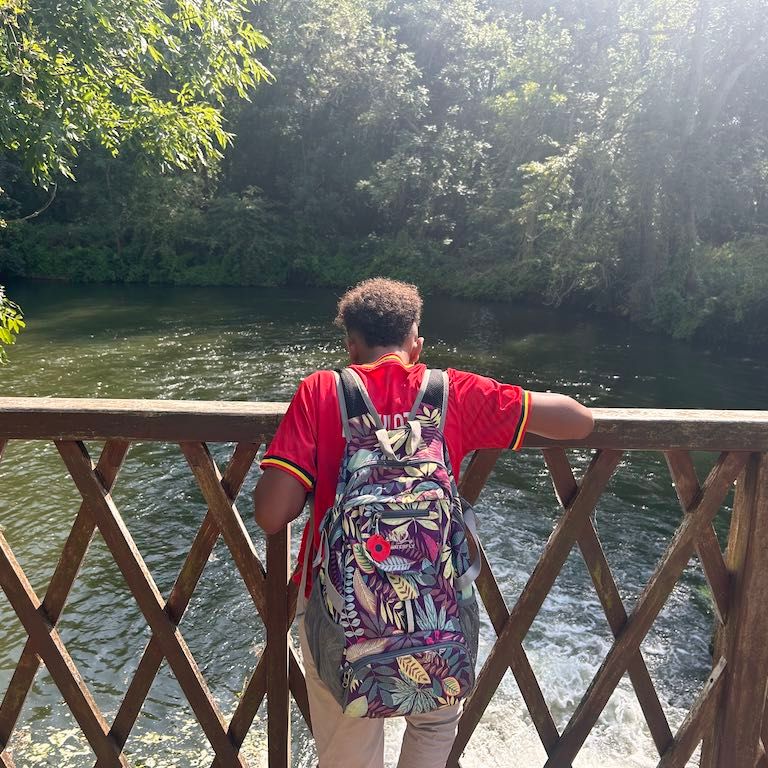
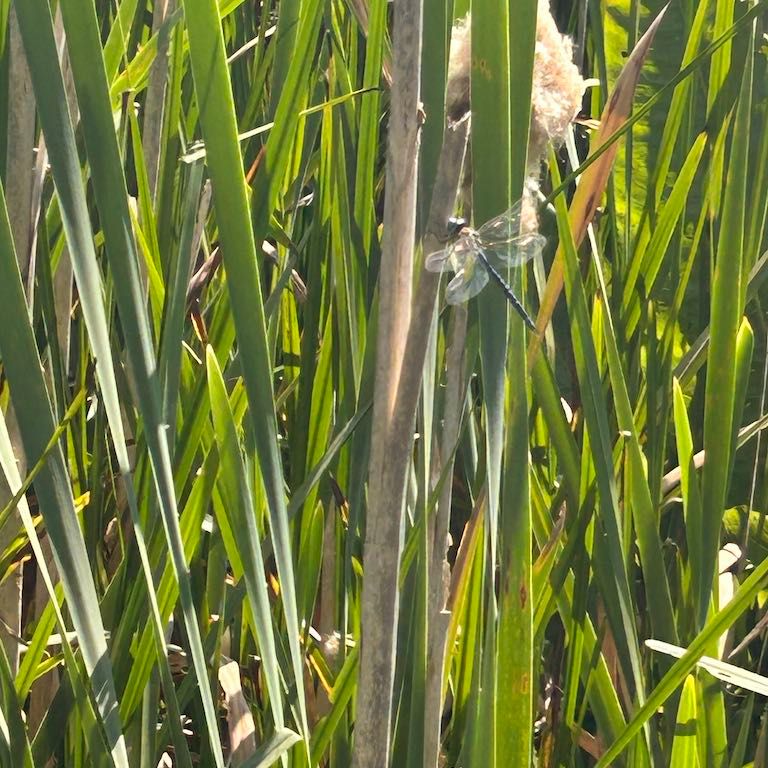
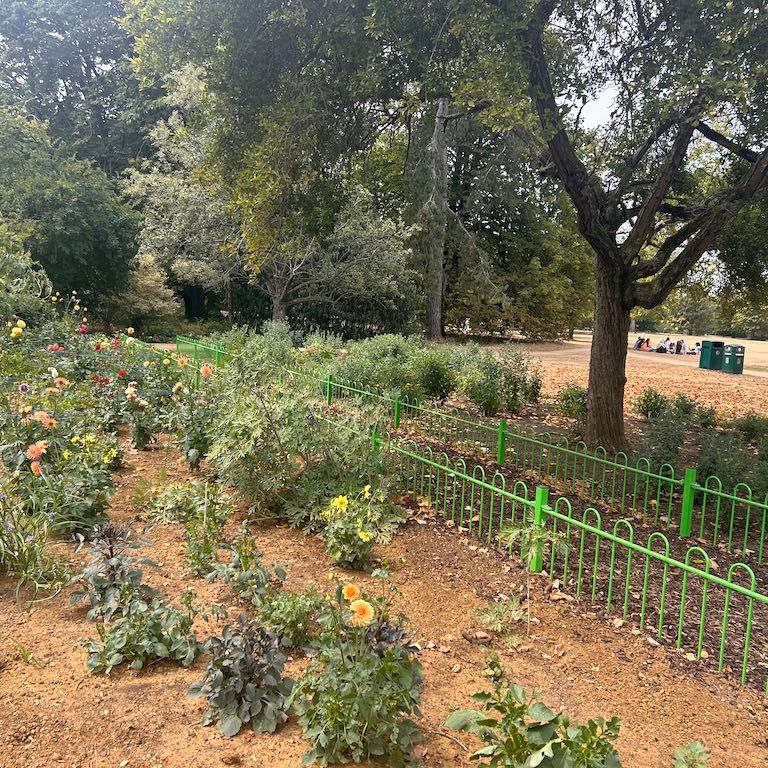
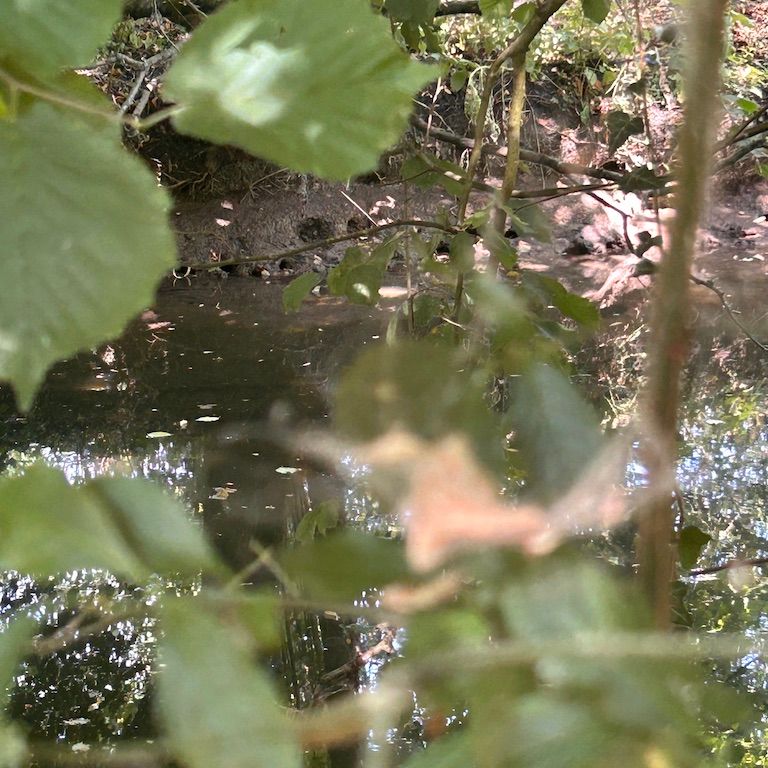
Escape the hustle of the city with a stroll round the park. Learn all about trees with the Arboretum Explorer Portal, watch dragonflies dart around the pond and hear birds chatter by the river.
Address: South Lodge, South Parks Road, Oxford OX1 3RF
Parking: No Parking
Public Transport: 20 minute walk from Oxford train station. Lots of buses stop nearby.
Opening Hours: Gates open at 7.45am. Closure is dependant on sunset times, check the website.
Entry Fee: Free
Website: parks.ox.ac.uk/
More Nature Adventures
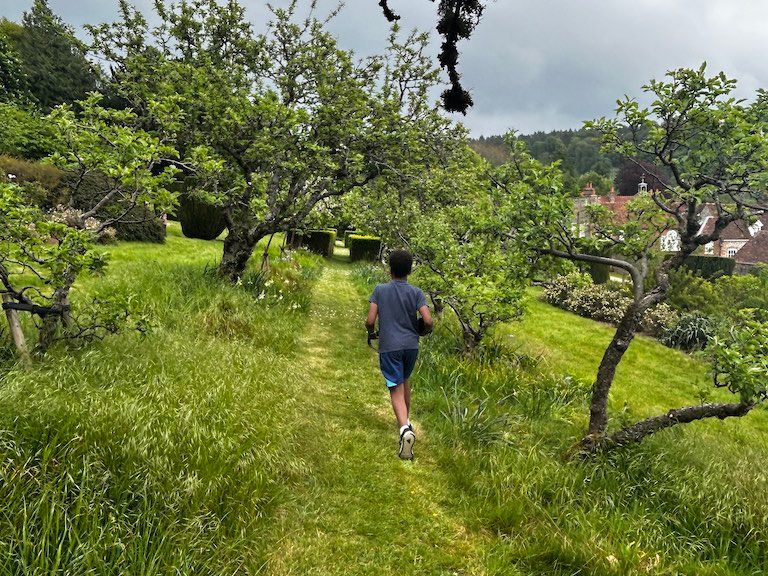
Nature Adventures · Parks and Gardens
Stonor Park
A fun-filled day spent exploring the adventure playground, spotting deer, getting up close with birds of prey and strolling round the gardens and arboretum.
Nature Adventures · Nature Reserves
Cothill Fen
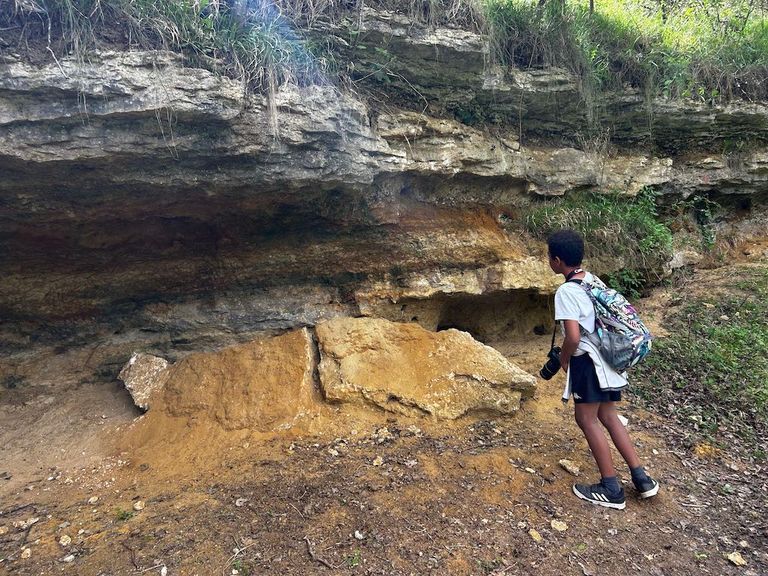
A distinctly Jurassic stroll through the most diverse area in Oxfordshire, taking in FIVE nature reserves. We saw solitary bees, fossils, woodpeckers and some impressive geology.
Nature Adventures · Nature Reserves
Thrupp Lake
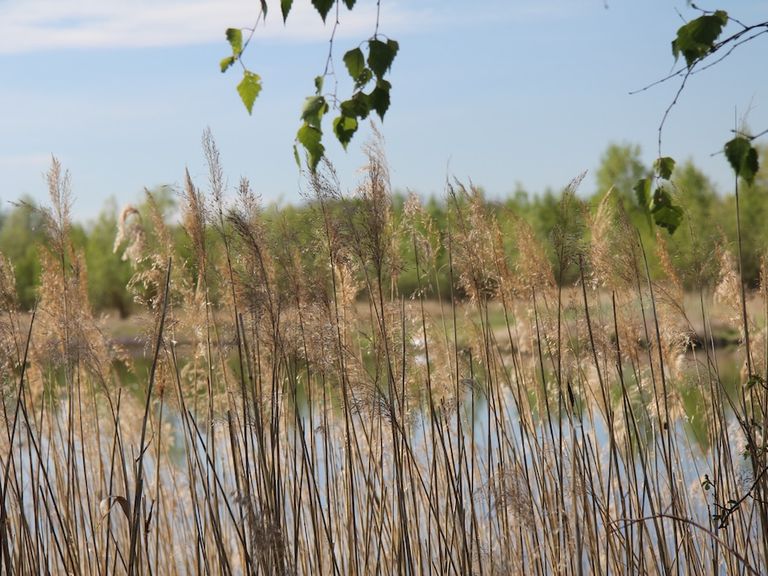
A gorgeous walk from Radley Station to Abingdon under the sounding bridge, around the lake and through Barton Fields, hearing an astonishing number of birds.
Find your nearest Adventure
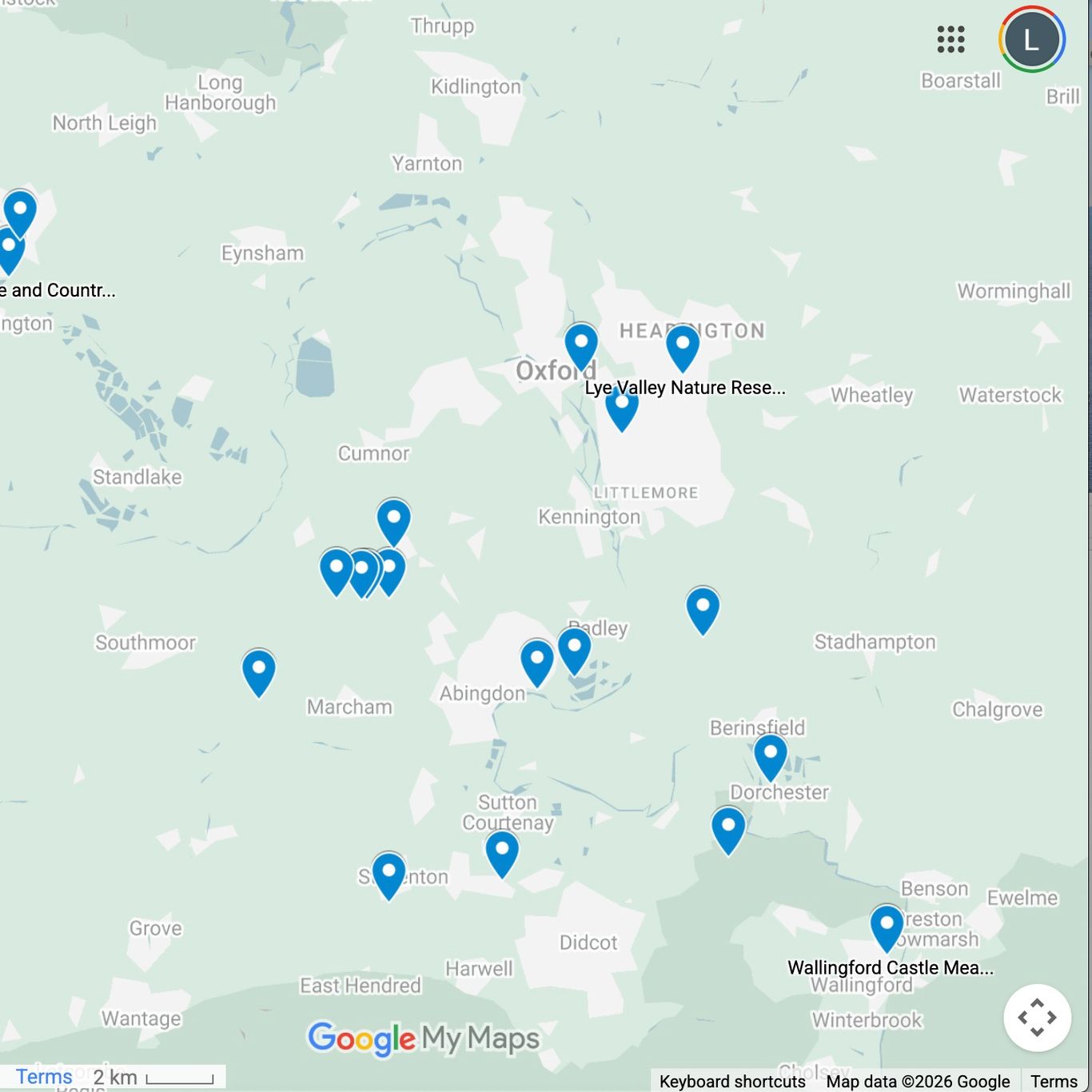
Please note - this map works best on desktop so that you can enjoy filtering by type of adventure, and clickable links.